
Date: December 15, 2025
Prepared by: REEHAN company for Energy Services
Subject: Analysis of the Proposed New Oil Refinery Project in Al-Furaqlis, Syria
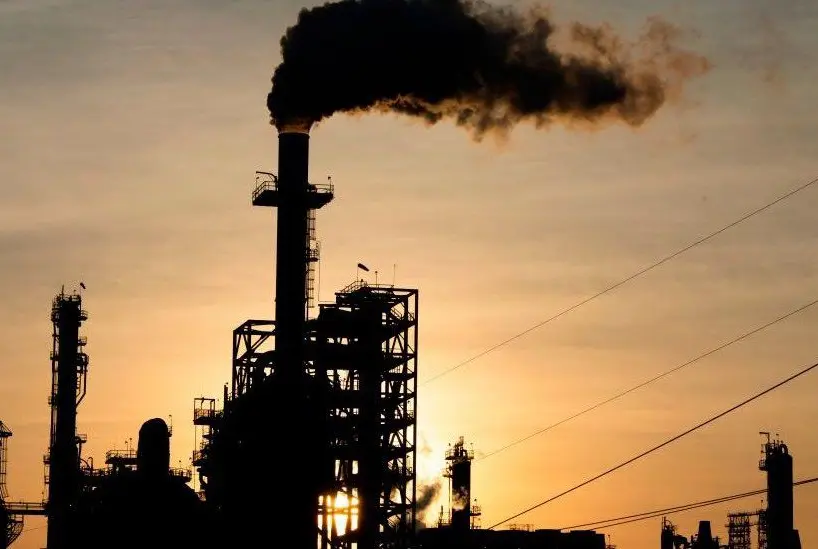
This report provides a detailed assessment of the Syrian Ministry of Energy’s initiative to revive and construct a new major oil refinery in the Al-Furaqlis region, east of Homs.
Executive Summary: Project Vision & Current Status
The Al-Furaqlis project represents the Syrian government’s cornerstone strategy to overhaul its aging and degraded oil refining infrastructure. Spearheaded by the Syrian Petroleum Company (SPC) under CEO Mr. Youssef Qablawi, the project aims to replace the obsolete Homs refinery with a modern facility. The strategic goals are clear: to enhance energy security, meet domestic demand for refined products, create exportable surplus, and integrate with a planned petrochemical complex for higher-value output.
As of December 2025, the project is in the advanced planning and initial development phase. Official timelines estimate a construction period of 3 to 4 years before the refinery becomes operational. Concurrently, the existing Homs refinery will continue to operate to ensure supply continuity during the transition.
- Technical Specifications & Strategic Rationale
- Capacity & Output: The new refinery is designed for a capacity of 140,000 to 150,000 barrels per day (bpd). This is more than double the current operational capacity of the Homs refinery (60,000-70,000 bpd) and is intended to satisfy local market needs while generating an exportable surplus.
- Technology & Design: The project emphasizes adopting state-of-the-art global refining technologies. Planned advancements include carbon capture systems and powering operations with natural gas to improve environmental and operational efficiency.
- Location Rationale (Al-Furaqlis): The site, approximately 51 km east of Homs city, was selected for several reasons:
- Decongestion & Environmental: To move a major industrial source of pollution away from Homs’ residential areas.
- Infrastructure & Expansion: The area is considered suitable due to existing transport links and service facilities, with ample space for future expansion, including the adjacent petrochemical complex.
- Strategic Redevelopment: The vacated prime land of the old Homs refinery is slated for redevelopment into integrated residential and service zones.
- . Commercial & Partnership Landscape
The project unfolds within a broader, active context of Syria seeking international partnerships to rebuild its entire energy sector.
- Syrian Petroleum Company frames the Al-Furaqlis refinery as a critical component of “Plan 2030,” a roadmap to transform SPC into a regional energy entity with potential for a future global stock market listing. Modernizing refining capacity is a foundational pillar of this plan.
- SPC is actively negotiating with major global firms to implement this project.
- Risk Assessment & Critical Challenges
Investors must weigh significant challenges inherent in the Syrian context:
- Legacy Infrastructure & Funding: The entire energy sector suffers from severe war damage, technical decay, and a critical shortage of spare parts, as evidenced by the struggles of the Homs refinery. Rehabilitation requires tens of billions of dollars in investment.
- Political & Security Environment:
Over the past several months Syria has taken bold, concrete steps to reconnect Syria with the global financial system. In June 2025, Syrian banks executed their first international transaction via SWIFT since the civil war — a direct commercial transfer from a Syrian to an Italian bank — signaling that formal cross-border banking is again possible.
In December 2025, CBS signed a partnership with Visa to build a modern digital payment infrastructure in Syria, including payment cards, digital wallets, QR and “Tap-to-Phone” merchant payments — bringing payments and transactions within the country up to global standards.
The economic picture is improving: economic growth is reportedly accelerating faster than previously estimated, as refugees return and reconstruction picks up.
For investors, this is a moment of rare strategic opportunity. The reintegration into SWIFT and the rollout of a Visa-backed digital payments ecosystem mean that Syria is rebuilding the plumbing needed for trade, remittances, payments, and cross-border capital flows — foundations essential to private-sector development, reconstruction, infrastructure, trade, and commerce. Coupled with IMF engagements and reform signaling from domestic authorities, Syria is re-casting itself as a potential financial and economic hub in the Levant.
Global banking connectivity is back, payment systems are being modernized, regulatory and monetary reform is underway, and macro conditions point to recovery and growth. Early investors who enter at this turning point can secure advantageous positions in critical sectors — reconstruction, infrastructure, commerce, finance — ahead of broader international competition. This may be one of the most compelling windows to support Syria’s revival and capture long-term value as the country rebuilds.
- Project Execution: The estimated 3-4 year timeline is ambitious. Success depends on uninterrupted funding, stable geopolitical conditions, and the ability to manage complex international partnerships simultaneously.
Conclusion and Strategic Outlook
The Al-Furaqlis refinery project is a high-stakes, strategic national initiative with a clearly defined technical and commercial vision. For a potential investor or partner, it presents two primary avenues:
- Direct Project Partnership: Engaging as a financier, technology provider, or EPC (Engineering, Procurement, and Construction) contractor for the refinery itself.
- Integrated Sector Investment: Leveraging the opportunity within the broader energy sector reconstruction, where partnerships (like the Saudi agreements) are already materializing in upstream (exploration/production) and midstream (field development) activities.
Final Recommendation: This project is best approached as a long-term, strategic play contingent on a comprehensive due diligence process that goes beyond the project’s merits to deeply assess political risk mitigation, financing structures, and the credibility of sovereign guarantees.